Sample — a demonstration landing page built by Victory Marketing Solutions. Helix Therapeutics Inc. is a fictional issuer; no product described here exists, every figure is illustrative and nothing is investment or medical advice. Back to Victory →
NASDAQ: HLXQFSE: 4HX

Corporate presentation · HLX-207 program

A hazard ratio of 0.62, with less toxicity than the comparator.

HLX-207 is a wholly owned, first-in-class oral allosteric inhibitor for second-line metastatic disease — a setting with no new mechanism approved since 2015, now supported by a randomised 1,215-patient Phase 2b readout and FDA Breakthrough Therapy designation.

  • Oral
  • Allosteric
  • Wholly owned
  • Breakthrough designated
Lead asset
HLX-207, oral allosteric inhibitor
Phase 2b hazard ratio*
0.62 (95% CI 0.51–0.75)
Median PFS
9.4 mo vs 4.1 mo
Cash position
$286M · runway into H2 2028
*Illustrative Phase 2b data for a fictional issuer. Not an approved product. See disclosure.

The setting

Second-line patients have had the same two options for eleven years.

In second-line metastatic disease, standard of care delivers a median progression-free survival of 4.1 months and an overall response rate of 26%. No new mechanism has been approved in this setting since 2015, and roughly 118,000 patients a year across the United States, European Union and Japan cycle through it.[1]

HLX-207 is a first-in-class oral allosteric inhibitor targeting a resistance node that the existing agents do not touch. In ASCEND-2 it produced a hazard ratio of 0.62 for progression or death, against an active comparator, in a randomised double-blind trial of 1,215 patients.[2]

HeadquartersCambridge, Massachusetts · labs in Basel
Lead assetHLX-207, oral allosteric inhibitor
StagePhase 2b complete · Phase 3 initiating
RegulatoryFDA Breakthrough Therapy designation
Addressable population~118,000 patients per year, US/EU/JP
Headcount204, of whom 141 in R&D and clinical

The asset is wholly owned. There is no partner, no milestone stack and no royalty burden ahead of a commercial launch.[1]

Pipeline, stage and ownership

Two assets, one pathway, no partner taking a cut.

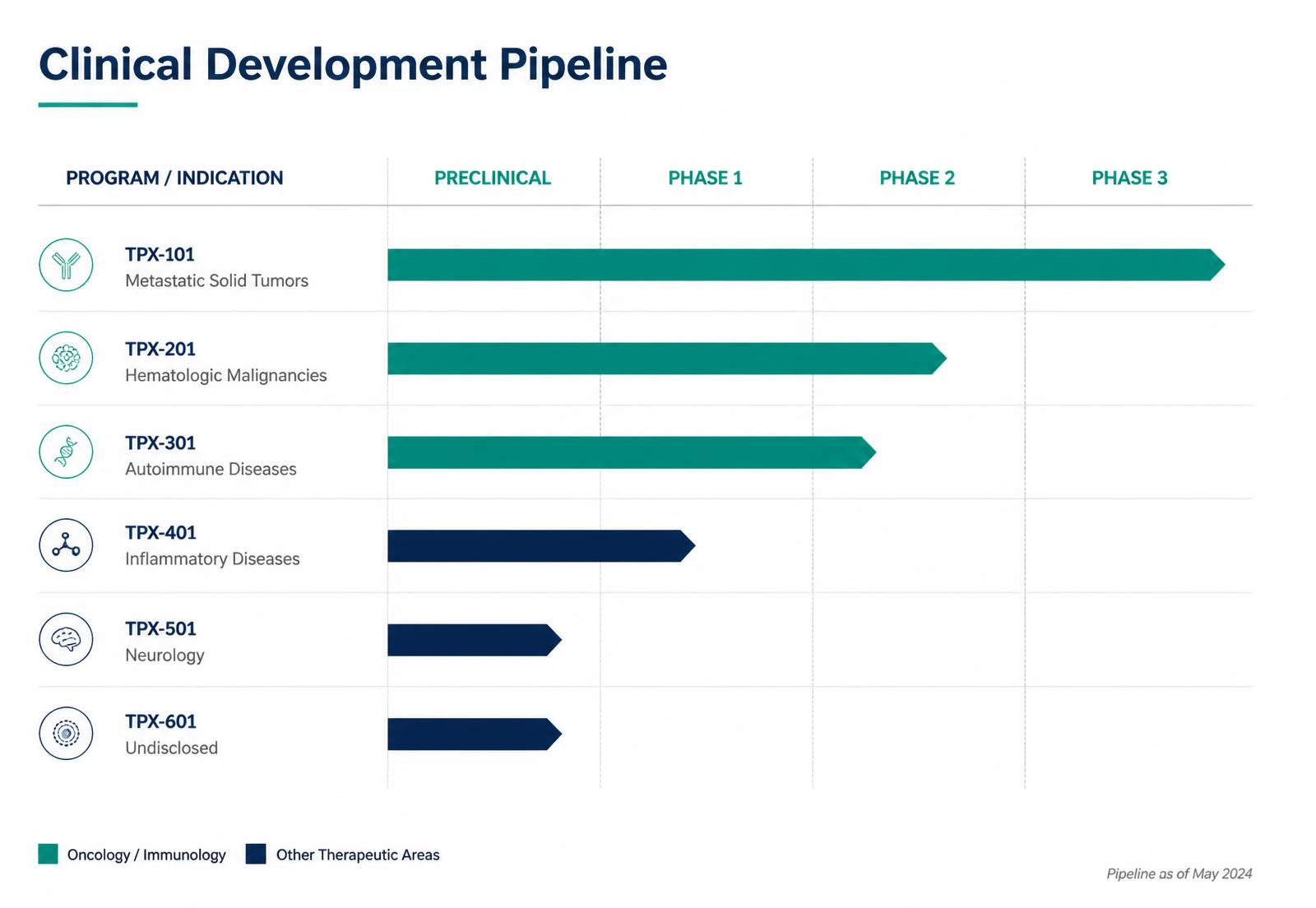
HLX-207 moves into Phase 3 in second line while HLX-330 enters combination testing. Both are wholly owned, so the economics of a first-line combination stay with the company.[1]

Clinical development pipeline chart showing HLX-207 progressing from Phase 2b to Phase 3 in second line and HLX-330 entering Phase 1b combination testing
Fig. 1Development pipeline and stage by program. Illustrative sample figure.
HLX-207
Phase 3 initiating
HLX-330
Phase 1b combination
Rights
Worldwide, wholly owned
Designation
FDA Breakthrough Therapy

Want the Phase 3 milestones when they land? Join the list →

The company

A clinical-stage developer built around one resistance mechanism.

Helix Therapeutics Inc. is a clinical-stage biopharmaceutical company incorporated in Delaware — founded in 2018 around translational work on a resistance node that reliably reactivates signalling after first-line therapy fails.[1]

The company holds worldwide rights to HLX-207 and, following the 2024 acquisition of Ridgeline Bio, to HLX-330, a monoclonal antibody against the same pathway being developed for combination use.[1]

ListingsNASDAQ: HLXQ · FSE: 4HX
Lead programHLX-207 — Phase 3 ready, wholly owned
Second assetHLX-330 antibody — 100% owned
Cash position$286M, runway into H2 2028

The ASCEND-2 readout

The results are in: hazard ratio 0.62, and the safety profile held.

On January 22, 2026, Helix reported topline results from ASCEND-2, a randomised, double-blind Phase 2b study of HLX-207 versus active comparator in 1,215 patients with second-line metastatic disease across 148 sites in 19 countries.[2]

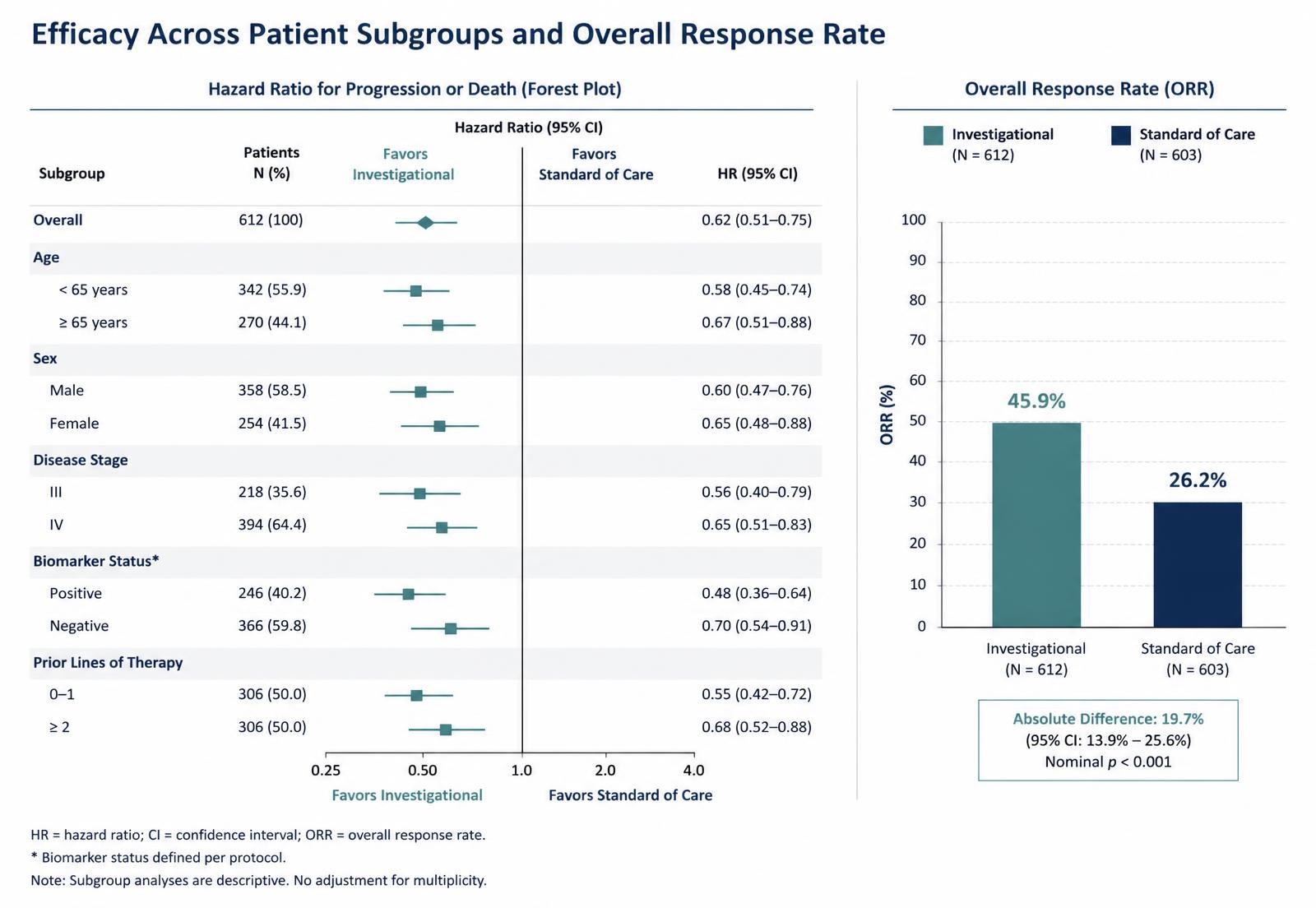
The study met its primary endpoint. Median progression-free survival was 9.4 months on HLX-207 versus 4.1 months on comparator, a hazard ratio of 0.62 (95% CI 0.51–0.75, p < 0.001). Overall response rate was 45.9% versus 26.2%. Grade 3 or higher treatment-related adverse events occurred in 18.4% of the HLX-207 arm versus 31.7% of the comparator arm.[2]

Median PFS9.4 months vs 4.1 months
Hazard ratio0.62 (95% CI 0.51–0.75), p < 0.001
Overall response rate45.9% vs 26.2%
Grade ≥3 treatment-related AEs18.4% vs 31.7%
Discontinuation for toxicity6.1% vs 14.8%

A better hazard ratio with a lower toxicity burden is the combination that changes prescribing behaviour — and it is the combination regulators grant Breakthrough Therapy designation for.[2][5]

How the benefit distributes

Lower hazard ratios are better. Every subgroup crossed the line.

Forest plot of hazard ratios for progression or death across ASCEND-2 patient subgroups with confidence intervals, alongside a bar chart of overall response rate versus standard of care
Fig. 2Subgroup forest plot and overall response rate. Illustrative sample figure based on the ASCEND-2 topline analysis; subgroup analyses are descriptive and unadjusted for multiplicity.

Why HLX-207 is different

An allosteric inhibitor — no competition with the natural substrate.

Most agents in this pathway are orthosteric: they occupy the active site and compete directly with the natural substrate. That competition is what drives both the escape mutations that produce resistance and the off-target toxicity that limits dosing.[4]

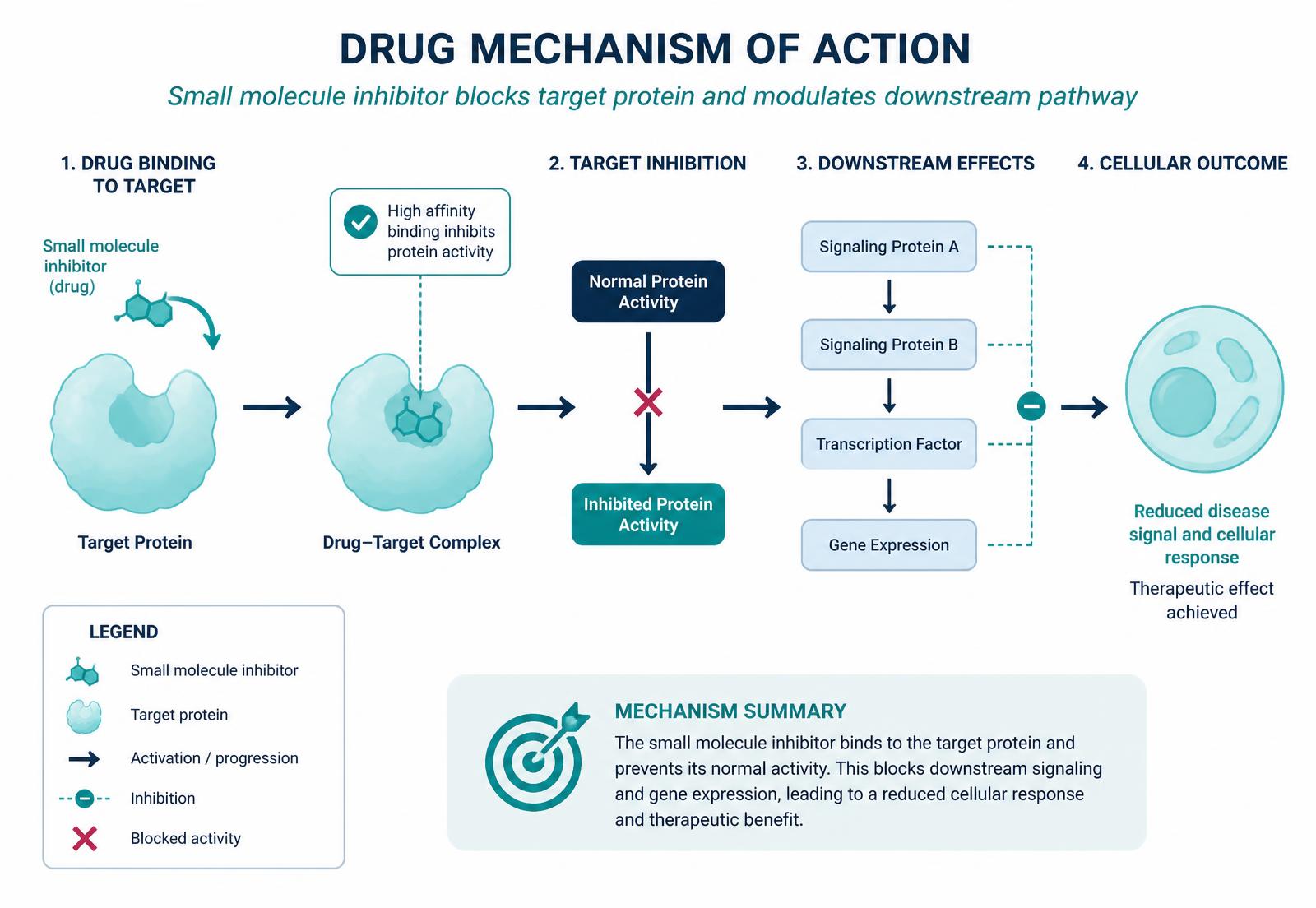
HLX-207 binds an allosteric pocket instead, locking the target in an inactive conformation. Substrate concentration is irrelevant to potency, and the known resistance mutations do not sit in the binding pocket.

Translational work confirmed that selectivity for the target over the nearest three paralogues exceeds 400-fold, which is the structural reason the Grade 3+ adverse event rate in ASCEND-2 came in below the comparator rather than above it. The tolerability is a property of the binding site, not of careful dose management.[4]

The ASCEND-2 results are definitive. They confirm that allosteric inhibition of this node delivers a clinically meaningful survival benefit with a tolerability profile better than existing standard of care. The potential to move this into first-line combination, alongside our wholly owned antibody, represents a compelling pathway for value creation.

Dr. Elena Vasquez-Roth, CEO, Helix Therapeutics Inc.

One mechanism, three shots on goal

Second line, first-line combination, and a maintenance setting.

One of the most significant implications of the ASCEND-2 tolerability profile is that HLX-207 is dosable in settings an intravenous agent cannot reach: chronic maintenance, and combination with an antibody against the same pathway. That spreads value across three indications rather than concentrating it in one label.[2][4]

Diagram of the HLX-207 mechanism of action showing allosteric binding at a cryptic pocket away from the active site, locking the target in an inactive conformation
Fig. 3Mechanism of action, allosteric conformational lock. Illustrative sample figure.
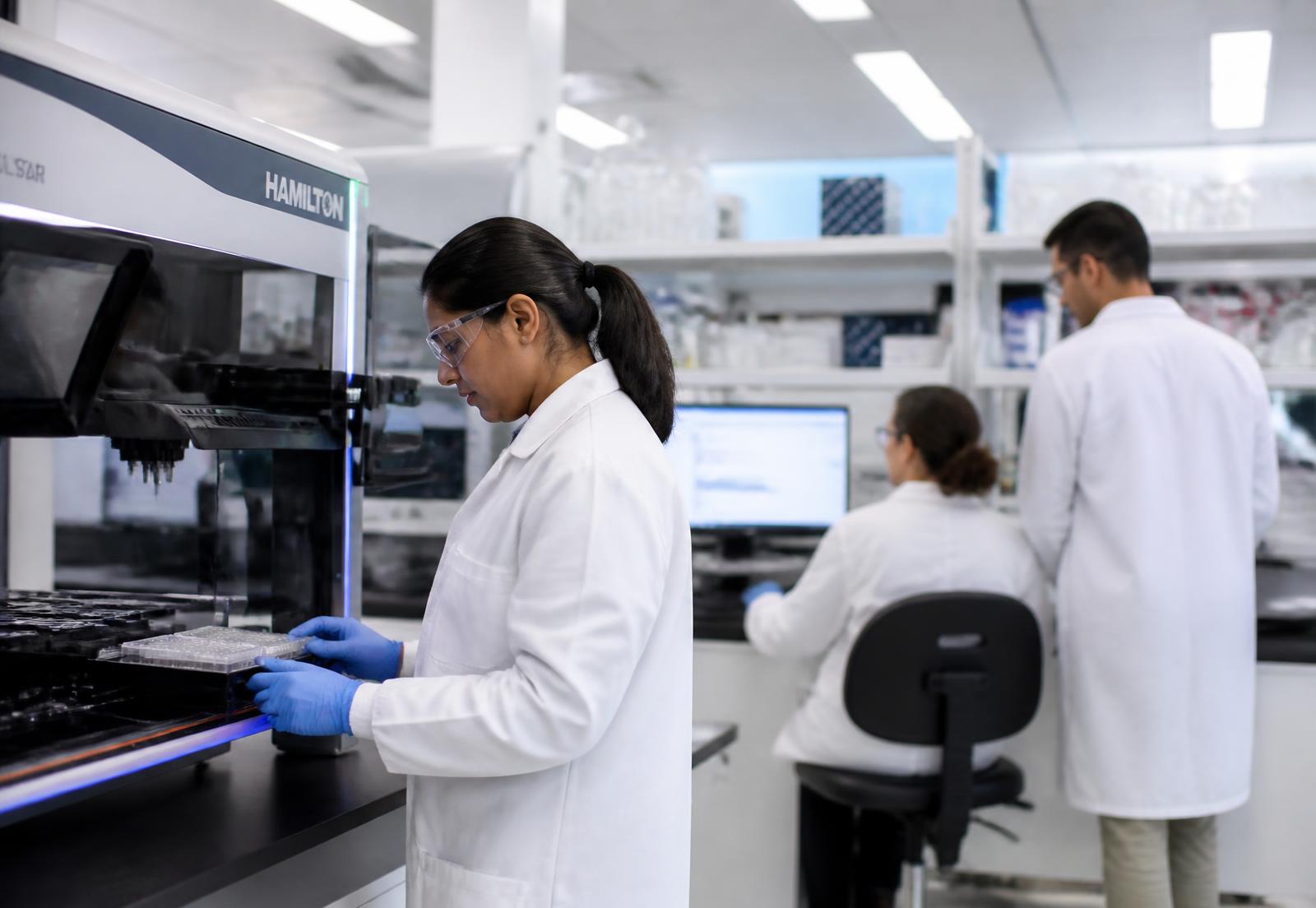
Photograph of a discovery laboratory bench with automated screening equipment, representing the fragment screening and structural biology program
Fig. 4Discovery and structural biology laboratory. Representative sample imagery.

Want the Phase 3 milestones when they land? Join the list →

The mechanism

A conformational lock on a resistance node.

After first-line therapy, tumour cells reactivate downstream signalling through a compensatory node that is not itself the original driver. The node is druggable but has resisted orthosteric approaches because its active site is shallow and highly conserved across paralogues.[4]

HLX-207 binds a cryptic pocket 14 Å from the active site, identified through fragment screening and confirmed by co-crystal structure at 1.9 Å resolution. Binding stabilises an inactive conformation and blocks the conformational change required for catalysis, without ever contacting the substrate-binding surface.[4]

In the data

The curves separate at eight weeks and stay apart.

Kaplan-Meier progression-free survival curve from ASCEND-2 showing separation between the HLX-207 arm and the comparator arm from approximately eight weeks onward
Fig. 5ASCEND-2 progression-free survival, Kaplan–Meier estimate. Illustrative sample figure.
EndpointResult
Primary — PFSHR 0.62, p < 0.001
Key secondary — ORR45.9% vs 26.2%
Duration of response11.2 mo vs 5.4 mo
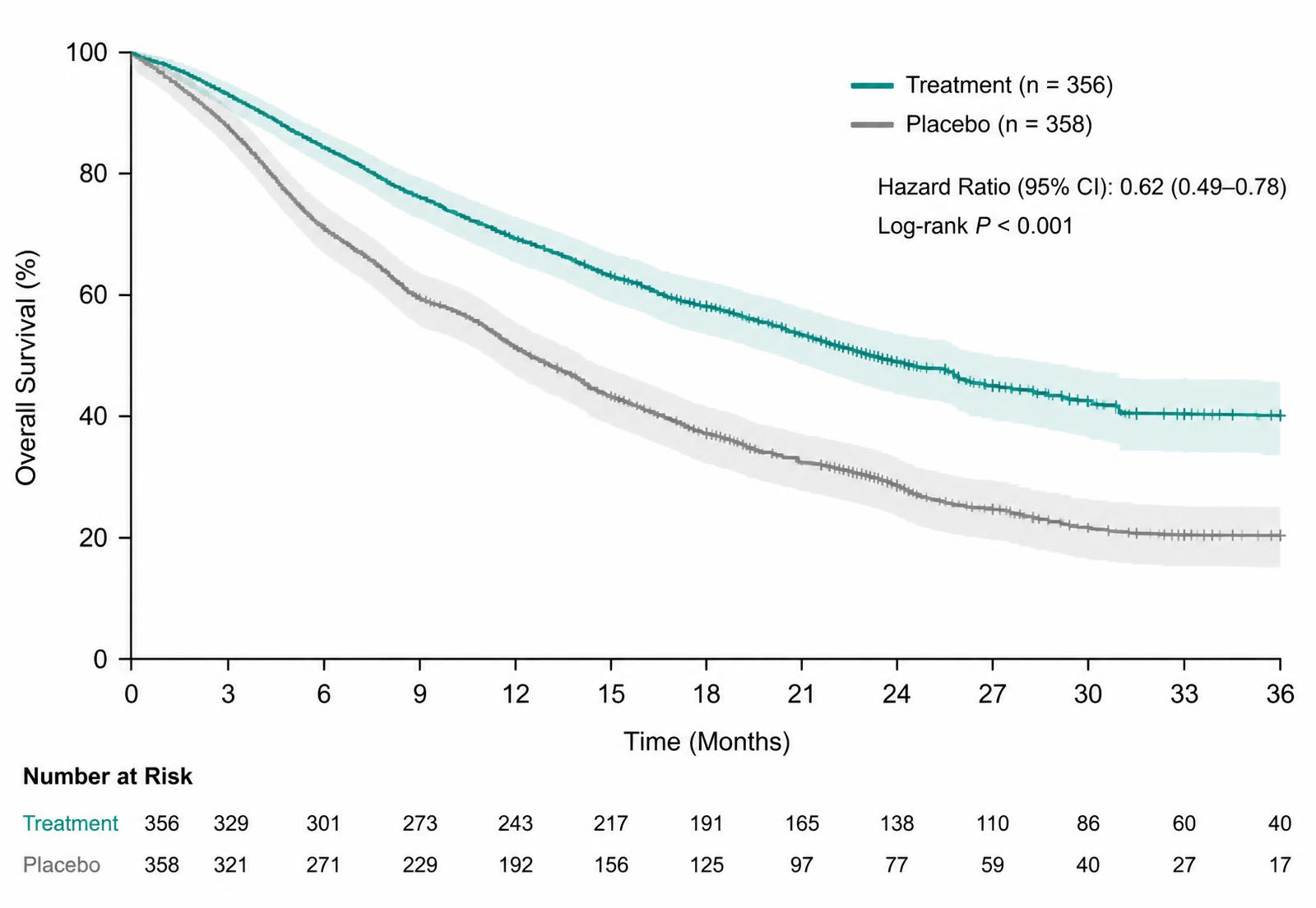
Overall survivalImmature at readout

Endpoint results summarise the ASCEND-2 topline analysis. Overall survival data were immature at the time of readout.[2]

History

Eight years from a fragment screen to a Phase 3 design.

2018 – 2020

  • Company founded around translational work identifying the resistance node in post-progression biopsy series.
  • Fragment screen identifies the cryptic allosteric pocket; co-crystal structure solved at 1.9 Å.
  • Lead optimisation delivers HLX-207 with >400-fold paralogue selectivity and oral bioavailability.

2021 – 2023

  • HELIOS-1 Phase 1/1b dose escalation in 96 patients establishes the recommended Phase 2 dose.
  • Expansion cohorts show durable responses in heavily pretreated patients, including two complete responses.
  • IND cleared for the randomised Phase 2b program; ASCEND-2 first patient dosed December 2023.

2024 – Present

  • Ridgeline Bio acquired, bringing the HLX-330 antibody and combination rationale in-house.
  • ASCEND-2 completes enrolment at 1,215 patients across 148 sites in 19 countries.
  • Topline readout January 2026; Breakthrough Therapy designation granted March 2026.

Between 2021 and 2023 the asset was evaluated in an open-label Phase 1/1b program in 96 patients, establishing dose, exposure and early signals of activity. Those data are early-phase, single-arm and uncontrolled, and are not comparable to the randomised ASCEND-2 results.[3]

Early-phase data

96 patients, 31% response rate — early-phase, and stated as such.

The HELIOS-1 program comprised 96 patients across dose escalation and three expansion cohorts, with notable results including:[3]

Dose escalation (n=38)MTD not reached · RP2D 240 mg once daily
Expansion cohorts (n=58)ORR 31.0% · 2 complete responses · DoR 7.8 mo

The expansion cohorts enrolled heavily pretreated patients with a median of three prior lines of therapy, a population in which the historical response rate to available agents is in the range of 8–12%. Duration of response of 7.8 months in that setting was the basis for the randomised Phase 2b design and for the choice of progression-free survival as the primary endpoint.[3]

Patients treated96
Overall response rate31.0%
Complete responses2
Median duration of response7.8 months
Recommended Phase 2 dose240 mg once daily, oral

These results are from an open-label, single-arm, early-phase study and should not be relied upon as evidence of efficacy, nor treated as comparable to randomised controlled data. Early-phase response rates in small, selected populations frequently fail to replicate in randomised settings. Cross-trial comparisons to historical response rates are not valid comparisons. Helix Therapeutics Inc. is a fictional issuer and every figure on this page is illustrative; no product referenced here exists or has been approved by any regulatory authority for any use.

Preclinical and translational

Five programs, five years, all pointing the same way.

Aldridge (2019) — target validation

Post-progression biopsy series across 214 patients identified consistent reactivation of the compensatory node after first-line failure, establishing it as a resistance mechanism rather than an incidental marker.

Vance & Osei (2020) — fragment screen and structure

Fragment-based screening of 2,400 compounds identified the cryptic allosteric pocket; the co-crystal structure at 1.9 Å confirmed a binding site 14 Å from the active site and independent of substrate occupancy.

Kowalczyk (2021) — selectivity profiling

Kinome-wide profiling demonstrated greater than 400-fold selectivity over the three nearest paralogues, with no meaningful activity across 412 off-target kinases at therapeutic concentrations.

Marchetti (2022) — resistance modelling

Serial passage under drug pressure in six cell lines failed to generate binding-pocket escape mutations over 40 weeks, in contrast to rapid emergence under orthosteric comparators.

Tanaka (2023) — combination rationale

Xenograft models combining allosteric inhibition with antibody blockade of the same pathway produced deeper and more durable regression than either agent alone, forming the basis for the HLX-330 combination program.

Preclinical and translational findings are exploratory in nature and frequently do not translate to clinical benefit in humans. They are presented to describe the scientific rationale for the program and should not be relied upon as evidence of safety or efficacy.[4]

The road forward

Phase 2b is complete. Phase 3 is already under way.

Phase 2b

Complete
  • ASCEND-2 randomised double-blind study in 1,215 patients — complete.
  • Met primary endpoint with HR 0.62; ORR 45.9% vs 26.2%; Grade ≥3 AEs lower than comparator.
  • Supported Breakthrough Therapy designation and the End-of-Phase-2 alignment.

Phase 3

Initiating
  • ASCEND-3 with overall survival as the primary endpoint in the second-line population; first patient in guided for Q4.
  • Parallel Phase 1b combination study of HLX-207 with the wholly owned HLX-330 antibody.
  • Regulatory strategy includes eligibility for rolling review under the Breakthrough designation.

Phase 3 follows the End-of-Phase-2 meeting held in May 2026, at which the agency aligned on overall survival as the primary endpoint, on the second-line population, and on the use of ASCEND-2 progression-free survival data as supportive. First patient in is guided for the fourth quarter, with a parallel Phase 1b combination study of HLX-207 and HLX-330 opening in the same period.[5]

Strategic context

Oral, wholly owned, and pointed at a setting nobody has moved in a decade.

Second-line metastatic disease is a large, poorly served and commercially concentrated setting: three products hold more than 80% of prescriptions, all of them intravenous, all of them approved before 2016.[1]

Helix's strategy is to establish HLX-207 as the oral standard of care in second line, then move the wholly owned combination forward into first line — retaining full economics through launch rather than partnering the asset away at the point of maximum leverage.[1]

The program benefits from Breakthrough Therapy designation, which brings intensive agency guidance and eligibility for rolling review. The combination of a differentiated mechanism, a favourable tolerability profile and an undisrupted commercial setting positions HLX-207 as an asset with significant clinical and strategic potential.[5]

Second asset

HLX-330 — the antibody that makes first line possible.

HLX-330 is a humanised monoclonal antibody blocking the same pathway at the receptor. It was acquired with Ridgeline Bio in 2024 for $62M upfront, and is being developed for combination use with HLX-207 rather than as a standalone agent.[1]

Ownership100% — worldwide rights, no royalty burden
Consideration$62M upfront, closed Nov. 2024
StagePhase 1b combination, opening Q4
ManufacturingDual-source CDMO, GMP material in hand
Ridgeline preclinical packageXenograft regression, Tanaka (2023)*
IP runwayComposition of matter to 2043*

*Ridgeline Bio Inc., asset purchase agreement and audited statements (2024). Patent term is illustrative and excludes any potential extension.[6]

The combination rationale is straightforward: allosteric inhibition suppresses the resistance node intracellularly while the antibody blocks upstream receptor engagement. In xenograft models the pair produced deeper and more durable regression than either agent alone.[4]

Combination testing is what carries the mechanism into first line, where the addressable population is roughly three times larger and where duration of therapy is substantially longer — which is why the tolerability profile from ASCEND-2 matters more than the response rate does.[1]

The team

A clinical-stage developer, run by people who have done it before.

Dr. Elena Vasquez-Roth, MD, PhD

CEO & Director

A medical oncologist and translational scientist with more than 24 years across academic medicine and drug development. She ran a translational research group at a comprehensive cancer centre, where the post-progression biopsy series underpinning Helix's target hypothesis was generated, then served as Chief Medical Officer of a mid-cap oncology company through two approvals. She has been principal investigator on eleven clinical trials, has authored more than 90 peer-reviewed papers, and co-founded Helix in 2018.

Grace Lindqvist, CPA

CFO

Twenty-one years in life sciences finance, including seven as CFO of a NASDAQ-listed clinical-stage company through a Phase 3 program and a commercial launch. She has raised more than $900M across equity, convertible and royalty financings, led the diligence and integration of two asset acquisitions, and has been a member of the American Institute of CPAs since 2005.

Dr. Marcus Oyelaran, PhD

Chief Scientific Officer & Director

Holds a PhD in structural biology from the University of Cambridge and a BSc in Biochemistry from University College London. He spent fourteen years in fragment-based drug discovery at two large pharmaceutical companies, where he led the programs that produced two clinical candidates, and directed the fragment screen and co-crystal work that identified the HLX-207 allosteric pocket. He holds fourteen patents in allosteric modulation.

Respectfully

Twelve hundred people volunteered for ASCEND-2 without knowing which arm they were in.

Helix Therapeutics Inc. acknowledges that every number on this page was produced by patients and families who accepted uncertainty at the hardest point in their lives, and by investigators and site staff across 19 countries. The company recognises an obligation to them that runs past the readout.[1]

  • Publish full trial results, including negative and secondary endpoints
  • Register every study and post results within regulatory timelines
  • Offer post-trial access to participants who continue to benefit
  • Design enrolment for demographic representativeness, and report it
  • Maintain an expanded access policy and publish the criteria

The approach is grounded in the principles of informed consent, data transparency and equitable access — on the belief that a medicine is only worth developing if the people who made it possible can see what it produced.[1]

Questions

What investors ask us first.

That in 1,215 randomised patients, HLX-207 produced a median progression-free survival of 9.4 months versus 4.1 months on comparator — a hazard ratio of 0.62 (95% CI 0.51–0.75, p < 0.001) — with an overall response rate of 45.9% versus 26.2% and a lower rate of Grade 3 or higher treatment-related adverse events.

The list

Program milestones go to the list before they go anywhere else.

Phase 3 initiation, combination study progress, overall survival maturity and regulatory developments. No third-party promotions. Unsubscribe any time.

Demonstration page built by Victory Marketing Solutions. Fictional issuer. Not investment or medical advice.

Sources and disclosure

  1. [1]Helix Therapeutics Inc., corporate presentation and Q4 2026 shareholder letter. Fictional issuer created for demonstration purposes.
  2. [2]ASCEND-2 (NCT-FICTIONAL-04821), randomised double-blind Phase 2b study of HLX-207 in second-line metastatic disease; topline results released January 22, 2026.
  3. [3]HELIOS-1 Phase 1/1b dose escalation and expansion, 2021–2023. Early-phase, open-label, single-arm; not comparable to randomised data.
  4. [4]Preclinical and translational programs: Aldridge (2019), Vance & Osei (2020), Kowalczyk (2021), Marchetti (2022), Tanaka (2023).
  5. [5]FDA Breakthrough Therapy designation granted March 4, 2026; End-of-Phase-2 meeting minutes, May 2026.
  6. [6]Ridgeline Bio Inc., asset purchase agreement and audited statements (2024), for the acquired HLX-330 antibody program.

Every claim on a Victory landing page is traced to a filing, trial record or named source. This page is a demonstration of that format built around a fictional issuer; the company, compounds, trials, people and figures do not exist, no product referenced here has been approved by any regulatory authority, no securities are offered, and nothing here is investment or medical advice. Early-phase and preclinical results referenced above are exploratory and would not be comparable to randomised controlled data.